
In recent years, as health management concepts gain wider popularity, more people have taken initiative to manage their weight. Lifestyles including fitness, running and dietary management have gradually become part of people’s daily routines. Nevertheless, many have encountered a confusing issue during weight loss:
They have shed pounds and fitted into smaller pants sizes, yet the contour of their legs fails to meet expectations.
Some lose over ten pounds but still struggle with saggy thighs. Some stick to aerobic exercise long-term, yet their leg lines remain unsmooth. Others find that even after their weight returns to normal, their body proportions are still far from what they want.
Why does this happen?
Industry experts explain that physical appearance is determined by far more than just the number on the scale. Muscle tone, body composition ratio and overall body contour also play vital roles in shaping one’s physique.
From the “Weight Loss Era” to the “Body Shaping Era”
In the past, many people regarded the number on the scale as an important standard for measuring the results of body management.
However, as public awareness of body management improves, more and more people come to realize that weight cannot fully reflect physical condition.
At the same weight of 55 kilograms, some people have toned lines and well-proportioned figures, while others may suffer from local sagging and undefined contours.
Such differences often stem from body composition.
Rather than merely tracking weight fluctuations, modern body management focuses more on the balance among fat, muscle and body proportions.
That is why “body shaping” has gradually become a buzzword in the industry.
Body shaping is not simply about getting thinner. It aims to refine body contours for smoother and more natural overall lines.
Why are thighs always a tough spot for shaping?
Among all body parts people care about, thighs remain one of the most sought-after areas for shaping.
Physiologically, thighs house some of the body’s largest muscle groups and are heavily affected by prolonged sitting.
For modern office workers, sitting for long hours has become routine. Factors such as sedentary lifestyles, insufficient exercise and irregular schedules tend to reduce the activation of leg muscles.
Low muscle activity may lead to poor firmness and vague leg contours.
Therefore, weight loss alone does not guarantee the desired visual improvement in legs.
Tech-assisted Training Enters the Field of Body Shaping
As demands for body management keep rising, tech-assisted training has gradually come into the public spotlight.
Unlike traditional training that relies entirely on voluntary exercise, new-generation body shaping devices leverage technological means to deliver focused and stable training stimulation to target muscle groups.
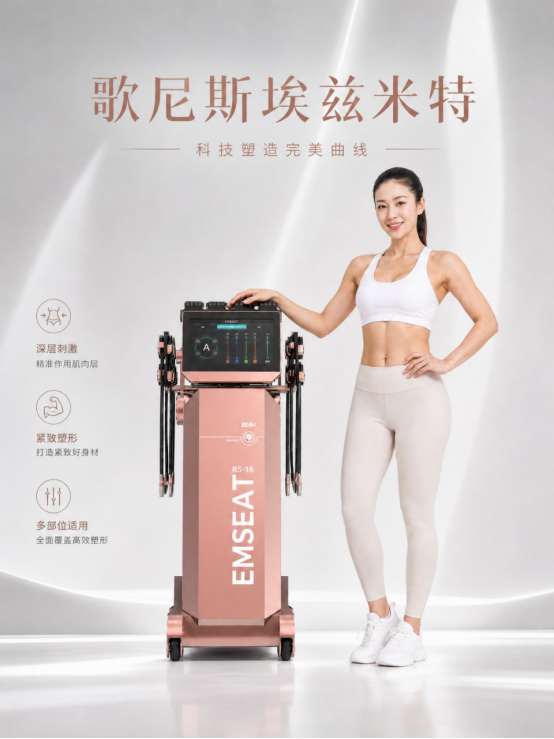
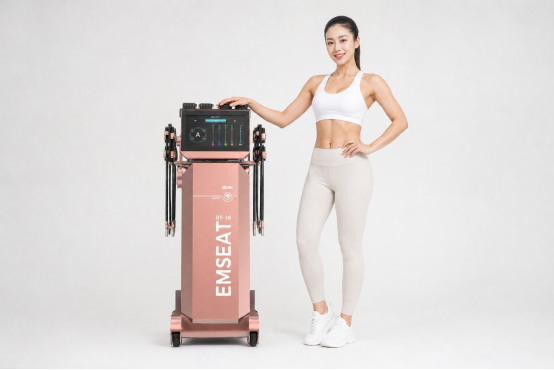
The Genis Ezmite is one such well-noticed device.
It is understood that the device adopts involuntary muscle training technology. Specific energy acts on target areas to deliver regular muscle stimulation and help boost muscle engagement.
For thigh shaping, its treatment area can cover multiple muscle groups including the anterior, posterior and inner thighs.
Through multi-module coordinated training, different muscle groups can achieve a relatively balanced activation experience.
Industry insiders believe that the emergence of such devices offers more diversified options for body management and unlocks greater possibilities in the body shaping journey.
Body management is becoming increasingly refined.
In fact, modern consumers’ demands for body management have undergone notable shifts.
In the past, the focus was simply “losing weight”.
Today, people pursue “losing weight beautifully”.
This shift is reflected not only in the number on the scale, but also in improved body contours, defined lines and overall physical condition.
Meanwhile, people are placing higher requirements on time efficiency.
How to achieve more scientific and efficient body management within limited time has become an area of ongoing exploration for the industry.
The emergence of tech-assisted training devices is a product of this evolving demand.
They are not designed to replace exercise. Instead, under professional guidance, they offer new auxiliary solutions for body management.
Health management remains the core foundation.
It is worth noting that no matter how technology advances, a healthy lifestyle remains a vital foundation for body management.
Balanced diet, regular rest and moderate exercise are still essential prerequisites for maintaining good physical condition.
Technological devices can offer auxiliary support, yet they cannot replace healthy habits themselves.
For those hoping to refine leg contours and optimize body proportions, building long-term awareness of health management, combined with scientific training and professional auxiliary solutions, may be the key to achieving the desired physique.
Shifting from simply chasing weight figures to focusing more on body contours and overall condition, body management is entering a more refined stage of development. Tech-assisted training devices represented by Genis Ezmite are also bringing new ideas and options to the body shaping sector.